
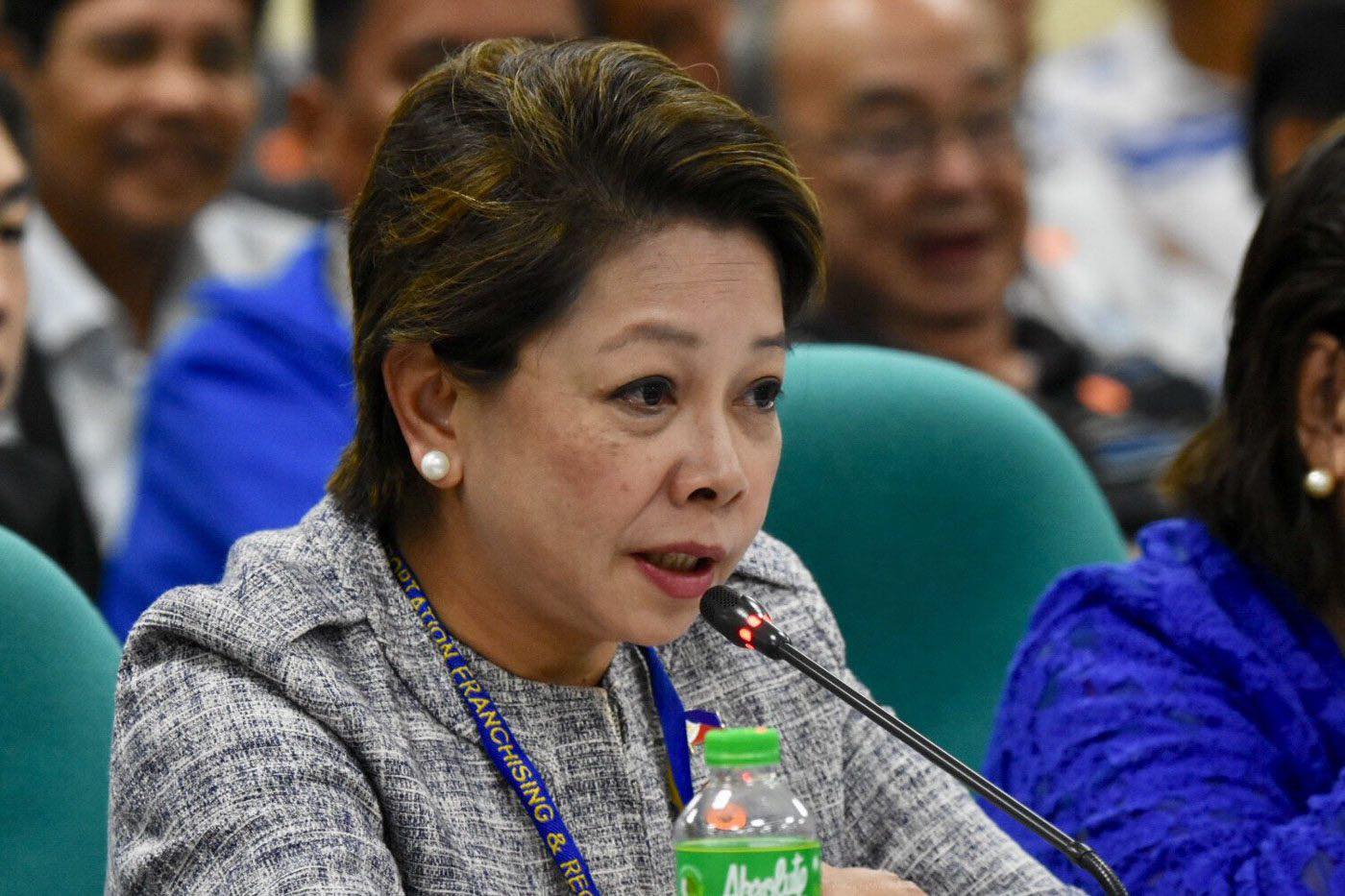
Different agency, different mandate, different era of public frustration.
But the feeling was familiar: that sense of relief when a public official speaks and you know they’ve actually read the law, thought about the consequences, and are willing to stand in the uncomfortable middle between angry citizens and a stubborn bureaucracy.
THE MEMORY OF A STRAIGHT TALKER
I remember her most from the LTFRB years.
Those early days of Grab and Uber, when every commuter had a story about surge pricing, missing cars, or endless traffic, and every press conference felt like a tug-of-war between innovation and regulation.
Lizada sat at that table and spoke like a lawyer who didn’t forget she was also a commuter.
She explained the famous 5‑million peso fine on Grab and Uber not as a show of force, but as a compromise: if the board had followed the older penalty rules to the letter, accreditation could have been cancelled; instead, they imposed a heavy fine because they knew the riding public relied on the services.
You could disagree with the decision, but you couldn’t say she hadn’t thought about who would pay the price.
That was her pattern at LTFRB: insist on rules, but remember there are people at the end of those rules.
BEFORE THE CAMERAS: OMBUDSMAN IN MINDANAO
Long before the cameras, she was an Ombudsman lawyer in Mindanao.
For about 12 years, she handled graft and corruption cases, which is not the kind of work you choose if you want an easy life.
The Civil Service Commission itself later described her as a “crime buster” and anti‑graft lawyer who built a reputation on going after abuse of power.
That background makes a huge difference, because it explains why she sounded the way she did when she finally moved into more visible roles.
You could hear that Ombudsman training whenever she talked about documents, missing case folders, or irregularities.
When she said that accreditation papers of ride‑hailing companies went missing under the previous LTFRB administration, it wasn’t casual chismis; it came with the weight of someone who knows what case folders mean for accountability.
It also explains why, in 2018, the president of the Catholic Bishops’ Conference of the Philippines publicly endorsed her as a potential next Ombudsman.
That kind of endorsement from outside the usual political circle doesn’t appear out of nowhere.
INSIDE THE LTFRB STORM
Her LTFRB stint put all of that into open conflict.
On one side: commuters who were tired, desperate, and just wanted a ride that would actually show up.
On another: operators, drivers, and a board struggling with an outdated framework for a new type of transport service.
Then there was the agency itself, with its own internal politics and habits.
Lizada pushed on a few fronts.
She called out missing accreditation papers for Grab and Uber from the previous LTFRB administration, highlighting the lack of proper turnover of critical documents.
She sat in interviews explaining that regulating transport network companies did not mean being “anti‑innovation,” but that rules had to catch up to protect both riders and operators.
She resisted fare moves she thought were unfair to commuters, at one point questioning a jeepney fare hike that many felt would burden riders further.
And then there was PITX.
When a memorandum about the Paranaque Integrated Terminal Exchange became controversial, Lizada’s disagreement with the LTFRB leadership and DOTr spilled into public view.
The department accused her of defying office protocol and feeding an unofficial memo to media, effectively painting her as a source of internal leaks.
She, in turn, positioned herself as someone standing for transparency and for provincial bus operators and commuters affected by policy changes.
It was messy. But in that mess, her voice cut through: detailed, legal, sometimes sharp, often unpopular, but consistent.
MOVED, NOT MUTED: HER CSC YEARS
Then she was moved.
In November 2018, President Duterte appointed her as commissioner of the Civil Service Commission, pulling her out of LTFRB and into a more systemic, less visible role.
For some, it felt like a promotion. For others, it looked like taking a loud board member out of a politically sensitive regulatory battleground.
At the CSC, the work changed from transport fights to the entire bureaucracy.
In her confirmation, she framed government service as “both an honor and a privilege” and said she wanted to “re‑instill the value of service and integrity” among the 1.5 million civil servants.
She talked about her goal of “gawing lingkod bayani ang bawat kawani” — turning every government worker into a kind of everyday public servant-hero, not in a corny way, but as a push for pride and responsibility in the job.
Her priorities were concrete:
- Design a better retirement program for state workers. - Strictly monitor work performance through Individual Performance Commitment and Review forms and qualification standards. - Use the Ease of Doing Business law to push agencies to cut red tape and serve faster.
She also kept showing up in spaces where civil servants needed to hear from the commission: speaking about integrity as the “capital” of the government workforce, calling out dishonest acts, and urging learning and development so public employees could stay agile and adaptable.
The tone stayed familiar: policy-heavy, values-heavy, but still grounded.
WHY HER VOICE LEAVES A MARK
So why does someone like you — or me — suddenly miss her while writing about someone else?
Because there’s a particular energy she brought into public conversations.
She made legal and regulatory issues feel less distant.
When she explained the Grab/Uber fine, or defended a regulatory choice, she framed it in terms of the riding public, the data, and the law, not just agency jargon.
When she pushed on missing documents or contested memos, it felt like someone was finally willing to say out loud what many insiders probably whispered about.
Senator Grace Poe, in sponsoring her CSC confirmation, described her as a “paragon of excellence and integrity” and said government needed someone like her in the bureaucracy.
Politicians say nice things all the time, but in her case, the words lined up with an actual track record across Ombudsman, LTFRB, and CSC.
In a system where so many appointees appear, perform, and then disappear, Lizada built something harder: a consistent public persona of someone who reads the documents, takes the rules seriously, and doesn’t shut up simply because the room gets uncomfortable.
Mahirap hanapin ang ganitong kombinasyon: lawyer, regulator, civil service commissioner, and still recognizably human in interviews.
MISSING HER, SEEING THE PATTERN
Missing her voice while writing about Sec. Hans says something about the kind of public servants I quietly gravitate to.
Both of them built careers in the least glamorous parts of government: labor law, migrant protection, anti‑graft work, transport regulation, civil service rules.
Both dealt with angry citizens and complex systems, and they chose detail, patience, and integrity instead of drama.
We live in a political culture that rewards noise. Viral hearings. Grand speeches. Manufactured “toughness.”
But the ones who stay with us are often those who did the grinding, thankless, technical work — and somehow managed to sound alive while doing it.
Now why am I all of a sudden talking about Atty. Lizada?
Because 2028 elections are creeping closer, QR3 is coming in, and I, as someone who supports good governance, am already scanning the horizon for people who look and sound like her.
That’s why it frustrates me that almost everyone who has so far expressed their intent to run for senator in 2028 are, frankly, low‑quality, recycled politicians who treat public office like a family business or a content platform instead of a serious job.
I’m looking for names that feel like Lizada: people who can handle the boring, technical work and still remember who they’re supposed to serve.
Right now, that list is painfully short.
To this day, I am salty that Atty. Lizada didn’t run. Because, and I have said this in the past, we need people like her, like Cielo Magno, Heidi Mendoza, Chel Diokno, Leila Delima - to bring back the glory of the senate of the people and for the people.
Because right now? Majority of them are clowns pretending to be lawmakers.
SOURCES
- CSC welcomes confirmation of Commissioner Lizada, https://www.csc.gov.ph/csc-welcomes-confirmation-of-commissioner-lizada
- CBCP president endorses Lizada as next Ombudsman, https://newsinfo.inquirer.net/989788/cbcp-president-endorses-lizada-as-next-ombudsman-cbcp-ltfrb-lizada-recommendation-ombudsman
- LTFRB on regulating Grab, Uber: We are not against innovation, https://www.abs-cbn.com/news/07/26/17/ltfrb-on-regulating-grab-uber-we-are-not-against-innovation
- Duterte transfers LTFRB's Lizada to Civil Service Commission, https://www.gmanetwork.com/news/topstories/nation/676523/duterte-transfers-ltfrb-s-lizada-to-civil-service-commission/story/
- LTFRB exempts buses from ending routes at PITX, https://www.philstar.com/nation/2018/11/25/1871414/ltfrb-exempts-buses-ending-routes-pitx
- 2024 Speakers – Global Government Leaders’ Forum (Aileen Lourdes Lizada profile), https://gglf.globalgovernmentforum.com/speakers/
- CSC, ARTA sign MOA to enhance ease of doing business, https://pia.gov.ph/news/csc-arta-sign-moa-to-enhance-ease-of-doing-business-govt-service-delivery/
- DOF, other agencies sign MOA on ease of doing business, https://www.dof.gov.ph/dof-other-agencies-sign-moa-on-ease-of-doing-business/
- CSC eyes civil servants’ empowerment via digital transformation, https://www.pna.gov.ph/articles/1207681
- Contact Center ng Bayan Coffee Table Book (CSC, Office of Commissioner Lizada), https://anyflip.com/ghjdh/iuwa/basic/101-150
- DFA grants 1,000 passport application slots to first-time OFWs (snippet referencing LTFRB spokesperson Lizada resigns), https://www.radyonatin.com/post.php/24044.bab652038f68b578