
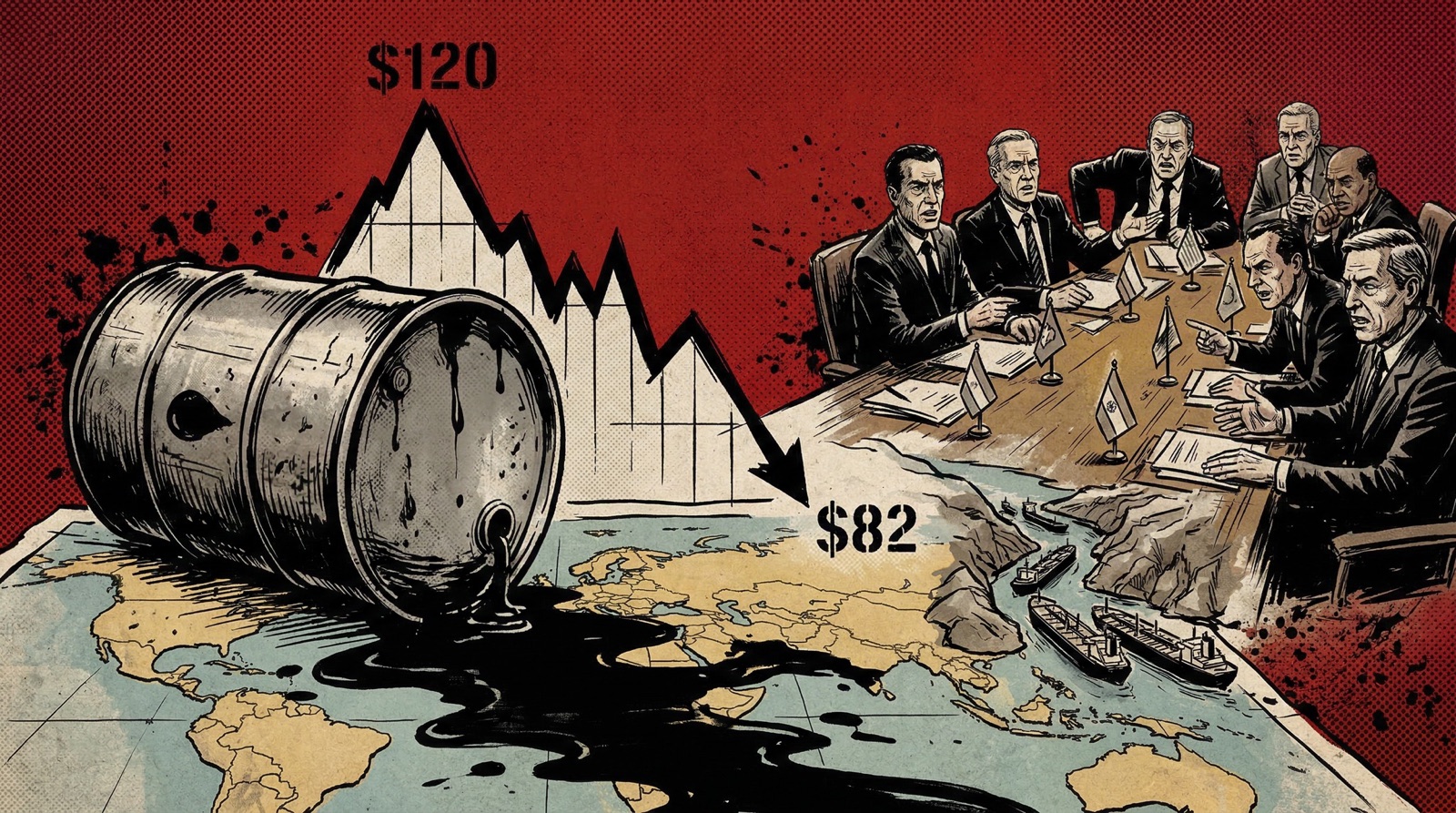
More than 30 governments are now deciding whether to release hundreds of millions of barrels of oil from their emergency stockpiles to prevent the worst energy crisis since the 1970s.
The International Energy Agency convened an extraordinary meeting of its member governments on Tuesday, March 11 — the first such emergency session since the outbreak of the Russia-Ukraine war in 2022 — to determine whether to deploy strategic oil reserves into the global market. IEA Executive Director Fatih Birol issued the call after what he described as "significant and growing risks" to the world's oil supply.
The IEA's member countries collectively hold over 1.2 billion barrels in government-controlled emergency reserves, plus an additional 600 million barrels in industry inventories mandated by regulation. The United States alone holds the largest single stockpile in the Strategic Petroleum Reserve.
According to CNBC, the U.S. believes a coordinated release of 300 million to 400 million barrels — representing 25 to 30 percent of the total emergency reserves — would be an appropriate response. If approved, it would be the largest coordinated release in IEA history.
FROM $120 TO $82 IN 24 HOURS
The IEA meeting came at the end of one of the most volatile 24-hour stretches in the history of global oil markets.
On Monday, Brent crude surged to approximately $120 per barrel as Gulf Arab nations cut production amid the closure of the Strait of Hormuz, through which roughly 20 percent of the world's oil supply normally transits. Consulting firm Rapidan Energy described the disruption as the largest in history.
By Tuesday afternoon, Brent had crashed more than 11 percent to around $82 per barrel. Two forces drove the collapse.
First, U.S. President Donald Trump told CBS News that the war in Iran was "very complete, pretty much" and suggested the conflict could end "very soon." Second, U.S. Energy Secretary Chris Wright posted on X that the Navy had "successfully escorted an oil tanker through the Strait of Hormuz," a claim the White House later said it could not confirm. Wright's post was deleted, but not before markets had already reacted.
Saudi Aramco CEO Amin Nasser warned of "catastrophic consequences" for the global oil market if the Strait remains blocked. Kuwait declared force majeure and reduced refinery output, citing Iranian threats against maritime traffic.
THE G7 AND IEA MOVED IN SEQUENCE
Before the IEA session, energy ministers from the Group of Seven — the United States, Canada, France, Germany, Italy, Japan, and the United Kingdom — held a virtual meeting on Tuesday to discuss a coordinated response. French Finance Minister Roland Lescure told reporters afterward that "everyone is prepared to take actions to stabilize the market, including the United States."
The G7 ministers requested the IEA provide formal scenarios for a potential reserve release before any final decision. EU Energy Commissioner Dan Jorgensen confirmed the IEA would supply a full analysis of the "advantages and disadvantages" ahead of the member-state vote.
UK Chancellor Rachel Reeves said she used the G7 call to push for "immediate de-escalation" in the Middle East and expressed readiness to support a coordinated release.
WHAT THIS MEANS FOR FILIPINOS
The Philippines imports virtually all of its crude oil and petroleum products, making it acutely exposed to global price swings.
Diesel prices are already projected to exceed P80 per liter. The peso fell to a record low of P59.50 against the dollar earlier this week before rebounding to around P58.89 on Tuesday. The Philippine Stock Exchange index lost P672 billion in a single session last week before recovering 2.01 percent.
In Congress, the House Ways and Means Committee approved a bill granting President Ferdinand Marcos Jr. authority to suspend or reduce excise taxes on petroleum products. The Palace has confirmed it will formally request emergency powers from Congress. BSP Governor Eli Remolona Jr. warned last week that a rate hike may be triggered if oil-driven inflation persists.
For the approximately 6,400 Filipino seafarers aboard vessels in the Persian Gulf region, the Strait of Hormuz remains a direct safety concern. Shipping traffic through the waterway remains at 97 percent below normal levels, according to United Nations data cited by Reuters.
SOURCES
- Al Jazeera, https://www.aljazeera.com/news/2026/3/10/iea-to-meet-as-countries-mull-releasing-oil-reserves-amid-iran-war
- BBC, https://www.bbc.com/news/articles/cx2jxe382pwo
- CNBC, https://www.cnbc.com/2026/03/10/iea-g7-oil-iran-war-strait-hormuz.html
- Reuters, https://www.reuters.com/business/energy/what-are-challenges-securing-shipping-through-strait-hormuz-2026-03-10/
- OilPrice.com, https://oilprice.com/Latest-Energy-News/World-News/IEA-Mulls-Emergency-Action-To-Unleash-Oil-Reserves.html
- AP News, https://apnews.com/live/iran-war-israel-trump--03-10-2026
- Bloomberg, https://www.bloomberg.com/news/videos/2026-03-10/oil-falls-after-trump-suggests-war-will-end-very-soon-video
- Inquirer, https://business.inquirer.net/578355/peso-closes-at-new-record-low-amid-surging-oil-prices