
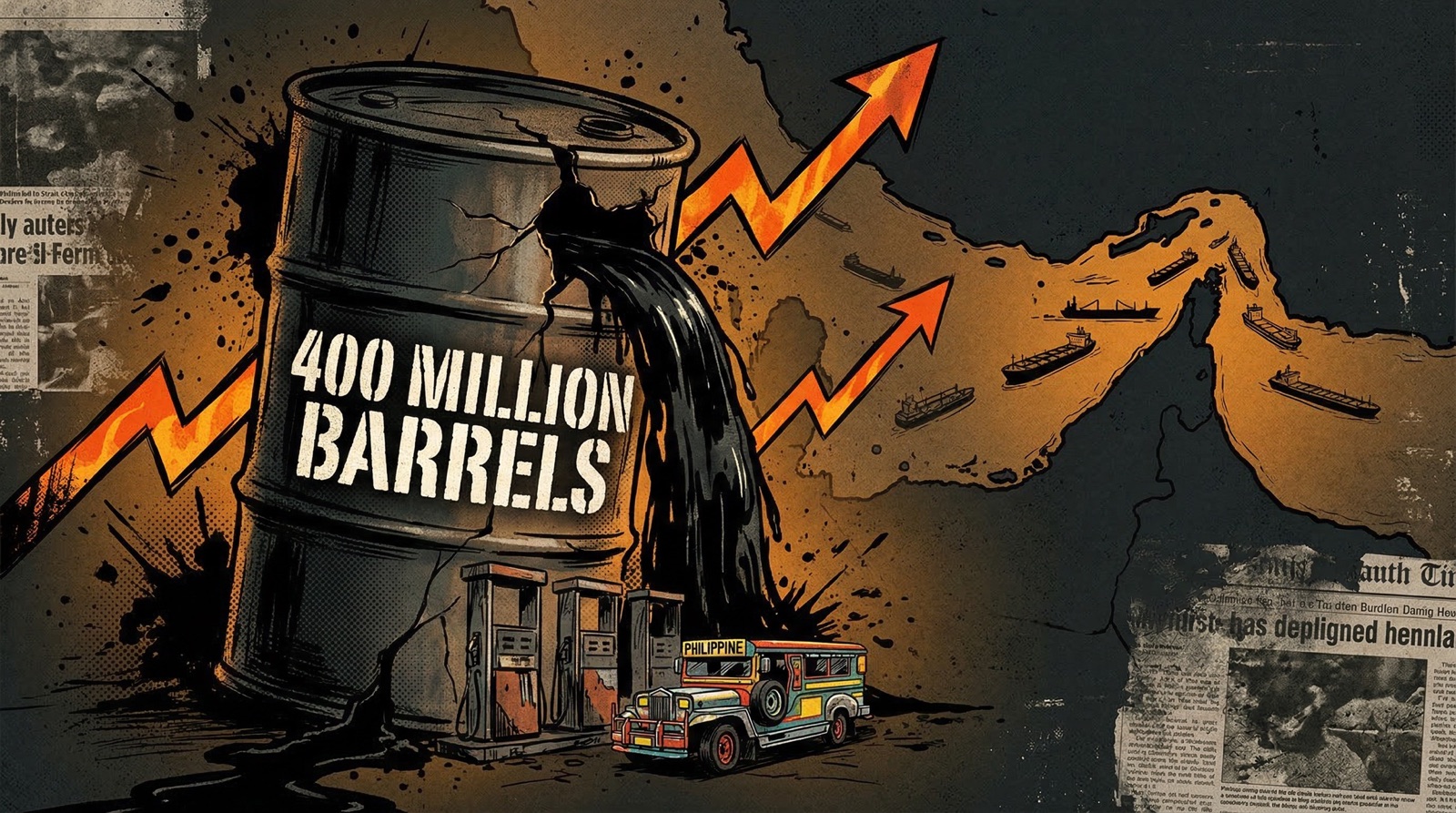
Thirty-two of the world's wealthiest nations agreed on Wednesday, March 11, to dump 400 million barrels of oil from their emergency reserves onto global markets.
It is the single largest coordinated oil intervention in the 50-year history of the International Energy Agency.
It dwarfs the 182 million barrels released in 2022 after Russia invaded Ukraine.
And it did not work.
PRICES WENT UP, NOT DOWN
Brent crude climbed nearly five percent on the same day the IEA made its announcement. By the close of trading on March 11, Brent hovered near $91 a barrel. It had touched $120 earlier in the week.
The math explains why. Wood Mackenzie estimates the war has knocked roughly 15 million barrels per day off the market due to the shutdown of the Strait of Hormuz. The IEA's release, spread over at least two months, would add about 1.75 million barrels per day.
That replaces 12 percent of what is missing.
"The oil market challenges we are facing are unprecedented in scale," IEA Executive Director Fatih Birol said. "IEA member countries have responded with an emergency collective action of unprecedented size."
THE STRAIT THAT NO RESERVE CAN BYPASS
The fundamental problem is geography, not storage.
The Strait of Hormuz carries one-fifth of the world's oil trade. Since the war began on February 28, Iran has used drones, missiles, mines, and naval forces to shut the passage.
On March 12, three more cargo ships were struck in or near the strait. The Thailand-flagged bulk carrier Mayuree Naree caught fire after a projectile struck it north of Oman. Iran's Revolutionary Guard Corps claimed the attack. A separate vessel off Ras al-Khaimah in the UAE was also targeted.
The security firm Neptune P2P Group reported that only seven ships transited the strait since March 8 — five of them linked to Iranian-associated shipping.
MINELAYERS DOWN, BUT MINES REMAIN
Trump told reporters that U.S. forces have struck 28 Iranian minelaying ships. Central Command said it has targeted more than 5,500 sites inside Iran, including over 60 naval vessels.
But mines already deployed in the strait continue to deter commercial passage. CENTCOM issued a warning on March 12 directing Iranian civilians to avoid port facilities where naval forces operate, stating that civilian ports used for military purposes become legitimate targets under international law.
THE PHILIPPINE IMPACT
Every barrel that does not move through Hormuz shows up at Philippine fuel stations.
DEPDev projected on March 11 that the oil shock could drive inflation to 4.5 to 5.1 percent this month. In a worst case — crude at $140 per barrel, sustained above $80 until September — inflation could spike to 6.3 to 7.5 percent. Both scenarios breach the BSP's 2 to 4 percent target band.
BSP Governor Eli Remolona had signaled openness to further rate cuts. That door is closed. Metrobank chief economist Nicholas Mapa said flatly: "The chances of continued rate cuts have firmly closed."
The House Ways and Means Committee passed a bill on March 10 authorizing President Marcos to suspend fuel excise taxes. DEPDev Secretary Arsenio Balisacan told the House that foregone revenue could reach P43.3 billion over three months, or P106 billion through September.
"If you don't do anything, that's going to reduce household consumption spending," Balisacan warned. "That could push us back below 5 percent growth."
Diesel prices at the pump face increases of up to P24 per liter this week.
RESERVES VERSUS REALITY
Germany and Austria have already begun unlocking their reserves. Japan starts Monday.
But no volume of reserves can replace a functioning shipping lane. Until the strait reopens — or alternative routes absorb the displaced volume — the gap between supply and demand will persist.
For the Philippines, that gap translates into higher pump prices, higher transport costs, and an inflation trajectory the central bank cannot control with interest rate tools alone.
Four hundred million barrels is a record. Fifteen million barrels per day is a bigger number.
SOURCES
- Bloomberg, https://www.bloomberg.com/news/articles/2026-03-11/iea-confirms-huge-release-of-emergency-oil-stockpiles
- Al Jazeera, https://www.aljazeera.com/news/2026/3/11/iea-proposes-release-of-400m-barrels-of-oil-from-strategic-reserves
- Reuters, https://www.reuters.com/business/energy/us-oil-prices-up-nearly-3-middle-east-crisis-constrains-supply-2026-03-10/
- Wall Street Journal, https://www.wsj.com/finance/commodities-futures/oil-futures-mixed-as-traders-digest-ieas-proposal-to-release-strategic-reserves-fdc8e3dc
- NBC News, https://www.nbcnews.com/business/energy/iea-release-400-million-barrels-oil-iran-war-rcna262931
- RNZ, https://www.rnz.co.nz/news/business/589355/oil-prices-continue-to-rise-despite-record-release-of-global-strategic-reserves
- Kitco News, https://www.kitco.com/news/off-the-wire/2026-03-11/oil-prices-rise-supply-fears-persist-despite-iea-plan-record-reserve
- CBS News, https://www.cbsnews.com/live-updates/iran-war-us-israel-strait-of-hormuz-ship-attacks-persian-gulf-drones-missiles/
- BusinessWorld, https://www.bworldonline.com/top-stories/2026/03/11/735381/oil-shock-to-bring-inflation-above-4/
- Inquirer, https://business.inquirer.net/578383/oil-shock-likely-shut-door-on-bsp-cuts
- Fast Company, https://www.fastcompany.com/91507417/iran-us-oil-europe-reserve-release
- Quiver Quantitative, https://www.quiverquant.com/news/IEA+Approves+Record+400+Million+Barrel+Oil+Reserve+Release+Amid+Iran+War+Supply+Disruption
- Investing.com (Reuters), https://www.investing.com/news/commodities-news/iea-proposes-largest-ever-oil-release-from-strategic-reserves-wsj-reports-4553387
- 1News (AP), https://www.1news.co.nz/2026/03/11/strait-of-hormuz-cargo-ship-ablaze-after-being-hit-by-projectile/