
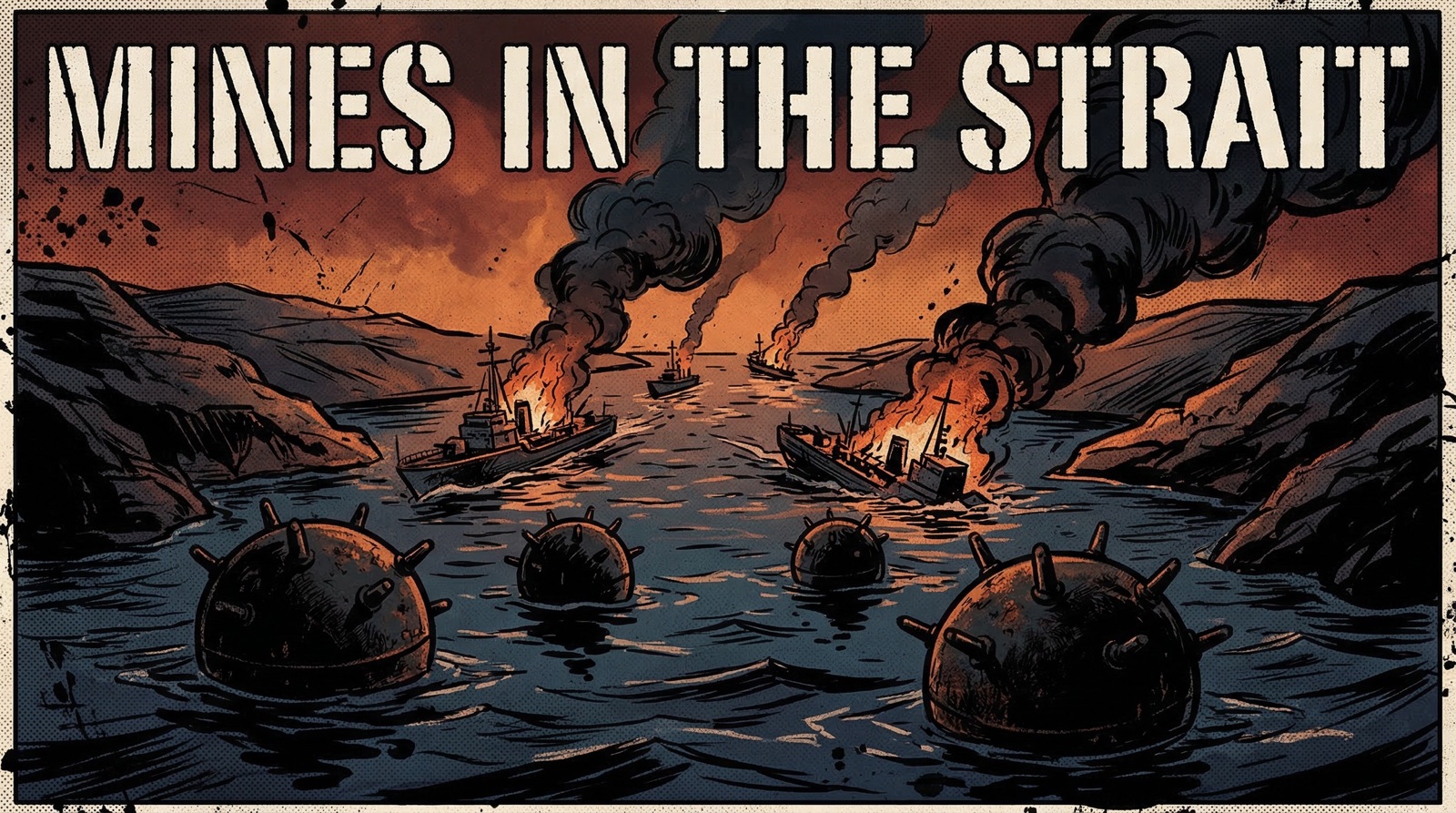
Sixteen Iranian vessels are at the bottom of the sea near the Strait of Hormuz.
U.S. Central Command confirmed on Tuesday, March 10, that the American military "eliminated" 16 Iranian mine-laying ships operating in the vicinity of the strait, the narrow waterway that normally carries roughly 20 percent of the world's oil supply.
The strikes were described by a senior U.S. official speaking to Axios as a "proactive step" — a preemptive operation based on intelligence indicating Iran was preparing to deploy naval mines in the shipping lanes. CENTCOM shared footage of the strikes on X, showing multiple attacks on the vessels.
President Donald Trump had earlier announced on Truth Social that the U.S. had "struck and completely destroyed" ten inactive mine-laying vessels, with CENTCOM later confirming the total at 16. Trump warned Iran of "military consequences of a scale never seen before" if mines were deployed in the strait, adding that the U.S. was using "the same technology and missile capabilities used against drug traffickers to permanently eliminate any vessel attempting to mine Hormuz."
THE MINE THREAT
The destruction of the 16 vessels came after CBS News, citing U.S. intelligence sources, reported that Iran appeared to be preparing to deploy naval mines in the Strait of Hormuz. CNN separately reported that Tehran may have already begun laying mines in the waterway, though Trump's own statements acknowledged there were no confirmed reports of active mines as of Tuesday.
BBC reported that U.S. intelligence believes Iran is preparing to deploy naval mines "in the future," and that the military is "formulating plans to ensure the Strait remains accessible to oil tankers."
Naval mines are among the cheapest and most disruptive weapons in modern warfare. Iran has maintained a significant mine stockpile for decades. During the 1988 Operation Praying Mantis, Iranian mines severely damaged a U.S. Navy frigate. A single mine in a shipping lane can force insurers to declare the area unnavigable, effectively halting commercial traffic without a single additional weapon being deployed.
If Iran successfully mines even a portion of the strait's narrow shipping lanes — just two miles wide in each direction — the disruption to global oil supply could last weeks or months. Mine clearance operations are slow, dangerous, and require specialized vessels and personnel.
THE ESCORT FIASCO
On the same day the mine-layers were destroyed, a separate incident exposed confusion within the U.S. government over Hormuz operations.
U.S. Energy Secretary Chris Wright posted on X that the Navy had "successfully escorted an oil tanker through the Strait of Hormuz," accompanied by a video clip. Markets reacted immediately. Oil prices, which had surged to approximately $120 per barrel the day before, began falling.
Then Wright deleted the post.
A Department of Energy spokesperson later confirmed the video was inaccurate. White House Press Secretary Karoline Leavitt clarified that the U.S. had "not yet provided escort services for any oil tankers or vessels through the Strait."
Iran's Revolutionary Guards responded through state media, with spokesperson Mohammad Ni stating that "any movement of the U.S. fleet and its allies will be thwarted by our missiles and drones."
The false escort claim contributed to a sharp drop in oil prices on Tuesday — Brent crude fell more than 11 percent to settle around $87.80 per barrel, and West Texas Intermediate dropped nearly 12 percent to $83.45 per barrel, according to MarketWatch. The crash also came as the International Energy Agency announced an emergency meeting to consider releasing the largest coordinated oil reserve drawdown in history.
WHAT THIS MEANS FOR THE PHILIPPINES
The Philippines imports nearly all of its petroleum products, and every disruption in the Strait of Hormuz lands directly at Filipino gas stations, jeepney terminals, and shipping docks.
Diesel prices have already been projected to reach P80 per liter or higher. The peso fell to a record low of P59.50 against the dollar earlier this week. Shipping lines have begun cutting inter-island routes and imposing 20 percent fuel surcharges on passengers.
President Ferdinand Marcos Jr. has directed the Department of Energy to formally request emergency powers from Congress to reduce the excise tax on fuel. Government offices shifted to a four-day work week on Monday to conserve energy.
An estimated 6,400 Filipino seafarers are currently aboard commercial vessels operating in and around the Persian Gulf — the same waters where the mine-laying threat is concentrated. The Department of Migrant Workers has declared the area a "warlike operations area" and suspended new worker deployments to several Middle Eastern countries.
If Iran successfully deploys mines in the strait, even temporarily, the impact on oil supply — and on Philippine fuel prices — could be far more severe and longer-lasting than anything the current crisis has produced so far.
SOURCES
- Reuters, https://www.reuters.com/world/middle-east/us-energy-secretary-deletes-post-about-navy-escorting-vessel-through-strait-2026-03-10/
- BBC, https://www.bbc.com/news/articles/cgrzken84q5o
- Axios, https://www.axios.com/2026/03/10/hormuz-strait-mines-war-trump
- CNN, https://www.cnn.com/world/live-news/iran-war-us-israel-trump-03-10-26
- CBS News, https://www.cbsnews.com/news/iran-mines-strait-of-hormuz/
- USA Today, https://www.usatoday.com/live-story/news/world/2026/03/10/iran-united-states-trump-war-updates/
- MarketWatch via Morningstar, https://www.morningstar.com/news/marketwatch/20260310132/oil-futures-lose-more-than-11-as-energy-ministers-consider-release-of-emergency-crude-reserves
- USNI News, https://news.usni.org/2026/03/10/operation-epic-escort
- Inquirer, https://business.inquirer.net/578611/oil-prices-dive-as-iea-eyes-emergency-release
- Philstar, https://www.philstar.com/business/2026/03/10/2513299/how-philippines-its-asian-neighbors-are-limiting-the-mideast-wars-impact-at-home