
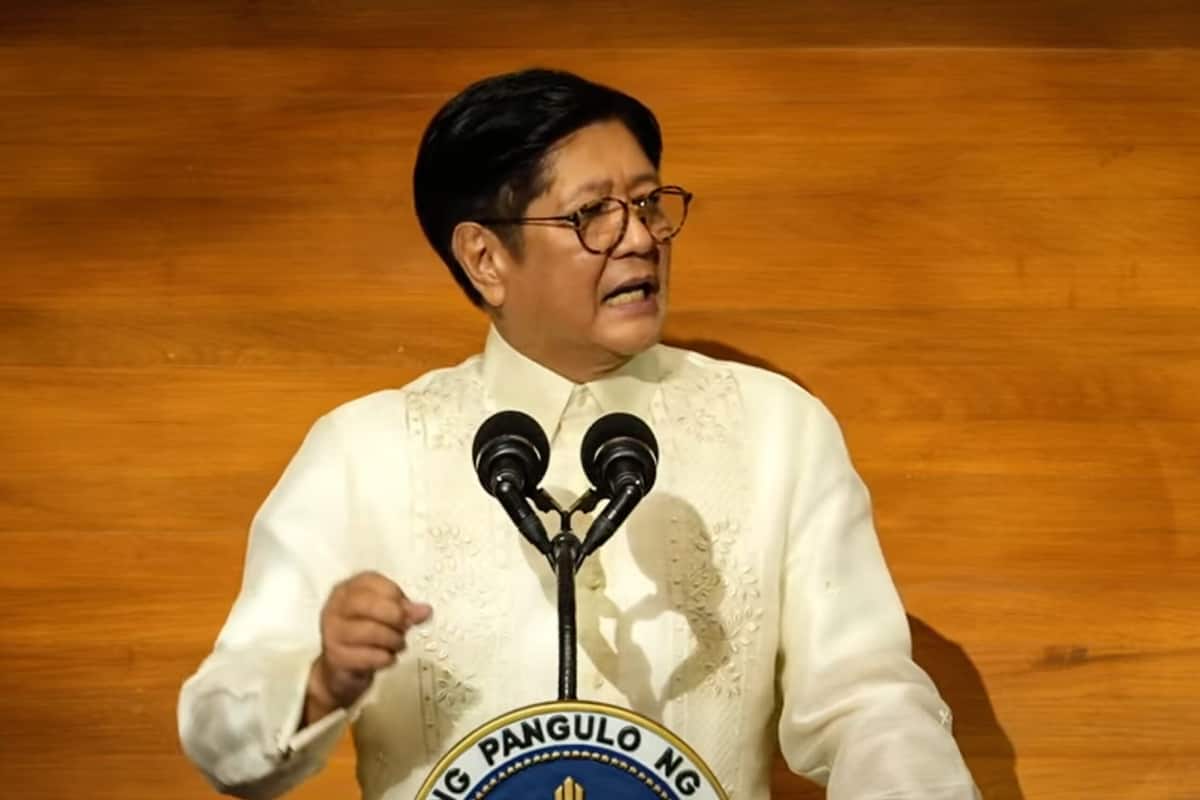
These are the other major programs, targets, and claims presented during the SONA that were not included in Part 1.
Figures reported by the President should be treated as administration claims unless supported by independently audited records.
AGRICULTURE AND AGRARIAN REFORM
Marcos reported increased production in rice, corn, sugar, pork, and poultry.
• The government reportedly distributed nearly 40,000 agricultural machines.
• It also established 145 rice-processing systems and three large cold-storage facilities.
• Marcos said approximately 18 million coconut trees had already been planted.
• The government is targeting 100 million new coconut trees.
• He said the National Food Authority would strengthen rice procurement and buffer stocking.
• The government also plans to strengthen measures against avian flu and African swine fever.
• Marcos reported approximately ₱19 billion in agricultural insurance payouts.
• Agricultural insurance is being expanded to cover livestock, fisheries, equipment, facilities, vehicles, and the lives of farmers and fisherfolk.
• More than 400,000 agrarian-reform titles covering over 500,000 hectares had reportedly been distributed.
• Marcos said the government was targeting the completion of land-title distribution in 2027.
• He also said the condonation of qualified agrarian-reform debt would be completed this year.
• These production, distribution, and completion figures remain administration claims.
FOOD ASSISTANCE AND FOOD PRICES
Marcos highlighted programs intended to provide cheaper food and direct rice assistance.
• More than 26,000 tons of rice had reportedly been distributed to over 2.5 million families.
• The government is targeting eight million beneficiary families.
• Marcos said the Benteng Bigas Meron Na program had reached more than 12 million people.
• More than 800 KADIWA outlets were reportedly operating.
• Nearly two million farmers and fisherfolk had reportedly received assistance through PAFFF.
• The government also intervened to limit increases in the price of imported rice.
• The beneficiary totals and claimed effects on food prices still require independent verification.
HOUSING
Marcos reported that more than 500,000 homes had been built or financed under government housing programs.
• More than 100,000 were reportedly added during the previous year under the expanded 4PH program.
• The total combines homes that were built with units that were financed.
• The government’s housing approach includes new communities, Pag-IBIG acquired assets, community mortgages, rental housing, and resettlement.
• The Pag-IBIG housing-loan ceiling was increased to ₱10 million.
• The reported number should not be interpreted as 500,000 newly completed housing units.
PENSIONS AND SOCIAL PROTECTION
Marcos announced or reviewed changes involving pensions, insurance, and worker protection.
• Retired uniformed personnel were granted increased pensions and subsistence allowances.
• The scheduled 10 percent increase in SSS pensions was advanced from September to June.
• Marcos said around 44 million Filipinos were covered by SSS.
• More than 80,000 drivers, vendors, gig workers, job-order personnel, and other informal workers were reportedly added to social-insurance coverage.
• Government contract-of-service and job-order workers will receive additional compensation to help pay SSS, Pag-IBIG, and PhilHealth contributions.
• Almost seven million overseas Filipino workers were reportedly insured.
• The government is also promoting wider access to private microinsurance.
• These coverage figures should remain attributed to the administration.
JOBS, LOANS, AND FINANCIAL RELIEF
Marcos presented employment and financial-relief measures introduced during the economic crisis.
• Nearly 100 Labor Day job fairs reportedly offered around 300,000 vacancies.
• More than 6,000 applicants were reportedly hired on the spot.
• More than 100,000 DILEEP and TUPAD beneficiaries reportedly received wages.
• Some banks and e-wallet providers reduced or removed transaction fees.
• Borrowers were offered payment extensions of up to six months.
• Agricultural borrowers could receive extensions of up to one year.
• Payment relief was also provided through SSS, GSIS, Pag-IBIG, and the National Home Mortgage Finance Corporation.
• The Bureau of Internal Revenue introduced a one-time tax-abatement program for qualified microentrepreneurs.
• Marcos also promised tax-relief measures for the middle class, although the detailed proposal still requires legislation.
• Nearly ₱58 billion in additional funding was reportedly released to local governments for public services.
• This ₱58-billion release is separate from the more than ₱60 billion mentioned for national assistance and crisis-response programs in Part 1.
AI TRAINING AND DIGITAL READINESS
Marcos said the country must prepare students, workers, and industries for artificial intelligence.
• Government AI-readiness and digital-literacy programs had reportedly reached at least 1.8 million students, parents, teachers, and other participants.
• He connected the use of AI with critical thinking, creativity, education, productivity, and industrial development.
• The 1.8-million figure refers to people reportedly reached by training or awareness programs. It does not establish proficiency or employment outcomes.
PAX SILICA AND ADVANCED INDUSTRIES
Marcos highlighted the proposed Pax Silica Industrial Hub as part of the government’s effort to enter the global AI and advanced-technology supply chain.
• The proposed hub will occupy approximately 1,620 hectares in New Clark City.
• It is intended to support semiconductors, artificial intelligence, advanced manufacturing, logistics, data infrastructure, critical minerals, and related industries.
• The project forms part of the US-led Pax Silica initiative and the Luzon Economic Corridor.
• The Philippines had already joined Pax Silica in April 2026.
• The industrial hub was therefore not announced for the first time during the SONA.
• The Bases Conversion and Development Authority estimated that the project could attract between US$40 billion and US$70 billion in investments.
• It is also projected to generate more than 130,000 jobs.
• These are projections—not investments already secured or jobs already created.
• The project remains proposed.
• Its investors, financing, environmental requirements, community safeguards, and final operating arrangements are still subject to negotiation and implementation.
ROCKET PROJECT AND PROPOSED CAGAYAN SPACEPORT
Marcos announced that Cagayan is being considered as the site of the country’s first spaceport.
• A sounding-rocket test launch is targeted for 2027.
• A sounding rocket is mainly used for scientific research, testing, and training.
• It is not the same as an orbital rocket designed to place a satellite into orbit.
• The planned test will involve South Korean aerospace company Perigee Aerospace.
• PhilSA, DICT, the Cagayan Economic Zone Authority, Ascend International Gateway, and Perigee Aerospace had already signed an agreement in March 2026.
• The agreement covers training, experimental rocket launches, and studies on the viability of a Philippine spaceport.
• The Philippines is not yet operating a commercial spaceport.
• The country is also not yet independently launching orbital rockets.
• The 2027 test remains a target.
• The final launch site, permits, safety standards, environmental safeguards, and operating arrangements still need to be completed.
TRADE, INVESTMENTS, AND ECONOMIC ZONES
Marcos presented the administration’s trade and investment agenda.
• He said the Philippines had 23 free-trade agreements that were either active or under negotiation.
• An economic partnership agreement with the United Arab Emirates was also being pursued.
• Marcos said more than ₱6 trillion in investments had been facilitated through the government’s Green Lanes.
• These were described as investments facilitated—not necessarily money already spent or projects already operating.
• The projects were projected to generate more than 400,000 jobs.
• New or proposed economic zones were mentioned in Dumaguete, Misamis Oriental, and Palawan.
• Marcos also called for further development of the halal industry.
• The investment and employment figures remain projections until the projects are financed, constructed, and operational.
PUBLIC-TRANSPORT MODERNIZATION
Marcos discussed the transition to electric and lower-emission transportation.
• Tariff-free treatment for electric vehicles will continue until 2028.
• The government is targeting electric vehicles to account for half of all vehicles in the country by 2040.
• Government agencies will prioritize electric vehicles when replacing official vehicles.
• Marcos mentioned electric Love Buses and electric articulated buses for Davao.
• He also highlighted the locally developed M/B Dalaray electric ferry.
• The government is studying the possible use of electric ferries along the Pasig River.
• The public-utility vehicle modernization program will continue.
• The 2040 EV figure is a policy target—not a guaranteed outcome.
OTHER TRANSPORTATION AND INFRASTRUCTURE PROJECTS
Marcos also discussed bus systems, bridge repairs, right-of-way reforms, and temporary transport and freight relief.
• He cited the initial portion of the Cebu Bus Rapid Transit project.
• An Ilocos Norte bus rapid-transit system is targeted for inauguration next year.
• He highlighted the Accelerated and Reformed Right of Way Act as a way to address delays in public infrastructure.
• Bridges in San Juanico, Isabela, Cagayan, Samar, and Iligan were reportedly repaired or rehabilitated.
• The government also implemented reduced fees involving some airports, seaports, terminals, tollways, and agricultural freight.
• Cebu Port passengers were granted free terminal fees.
• Some airport passenger service charges were reduced.
• PITX terminal fees were temporarily suspended.
• Agricultural and food cargo received a reduced ₱1 Ro-Ro terminal fee.
• DA-accredited agricultural trucks received free expressway tolls.
• Some of these measures were temporary crisis responses and may no longer be active.
DISASTER RESPONSE AND PREPAREDNESS
Marcos described a nationwide network intended to deliver emergency assistance more quickly.
• More than 600,000 families affected by earthquakes in the Visayas and Mindanao reportedly received assistance.
• More than ₱3 billion in immediate assistance was reportedly released.
• The disaster-resource network includes three primary centers, 15 hubs, 76 spokes, and 919 last-mile facilities.
• Marcos said this system could deliver emergency supplies within 24 hours.
• That delivery-time claim will depend on the location, condition of roads, weather, logistics, and the scale of the emergency.
• The government is deploying Mobile Energy Systems to provide electricity during emergencies.
• It is also developing a Government Emergency Communications System.
• A private-sector satellite-to-mobile service was mentioned as part of emergency communication planning.
• Marcos also referred to the State of Imminent Disaster mechanism, which allows action before a disaster occurs.
FLOOD PREVENTION AND WASTE MANAGEMENT
Marcos discussed programs intended to address flooding, blocked waterways, and solid waste.
• Oplan Kontra Baha includes the cleaning of esteros, drainage systems, and other waterways.
• Cash-for-work operations reportedly covered more than 200 waterways.
• The government is considering waste-to-energy and modern waste-treatment systems.
• Marcos also promoted waste recovery, processing, and upcycling.
• The former Carmona landfill is being converted into an MMDA nature park and disaster-training facility.
• Proposed waste-to-energy projects will still require environmental, health, regulatory, and community safeguards.
EDUCATION, SKILLS, AND EMPLOYMENT
Marcos also discussed programs intended to connect education more directly with employment.
• More than 1,500 Senior High School graduates were reportedly hired on the spot through government-supported activities.
• Senior High School graduates may now qualify for some entry-level government positions.
• Work-immersion programs are being expanded.
• Marcos cited an 81 percent employment rate among graduates of technical-vocational programs.
• That rate requires clarification because placement rates may vary by course, region, and reporting period.
• He highlighted Tsuper Iskolar and En-TSUPER-neur for transport workers.
• More than 10,000 farmers and fisherfolk are targeted for skills training.
• The government is also implementing the ladderized Tech-Pro program and the TESDA Passport.
CHILD PROTECTION AND SCHOOL SAFETY
Marcos discussed threats facing children both online and inside schools.
• He cited fake news, pornography, online violence, hate culture, teenage pregnancy, and rising HIV cases.
• He called for stronger school security involving DepEd, barangays, local governments, and the Philippine National Police.
• Schools are expected to strengthen anti-bullying procedures and emergency-reporting systems.
• Teachers and principals will receive additional training in handling student conflicts.
ADDITIONAL HEALTHCARE PROGRAMS
Marcos mentioned several healthcare programs that were not included in Part 1.
• More than 2,000 medicines had reportedly been exempted from value-added tax.
• Additional blood tests and medicines are planned for kidney, liver, thyroid, and hepatitis B conditions.
• Marcos also mentioned PhilHealth benefits involving HIV/AIDS and tuberculosis.
• Under Project Aruga, additional support is being provided for children and families requiring specialized care.
• Marcos said nearly three million patients had benefited from zero-balance billing.
• More than eight million people had reportedly received assistance through MAIFIP.
• The government is introducing e-MAIFIP through the eGovPH application.
• Marcos also mentioned BUCAS centers, specialty centers, and VALOR Clinics for veterans.
• Medical scholarships tied to public service are being expanded.
• Beneficiary counts and zero-balance billing claims should remain attributed to the administration.
SPORTS
Marcos said government support for sports had been tripled.
• He specifically mentioned tennis player Alex Eala.
• He also recognized the Filipinas women’s national football team.
• The speech did not provide a detailed breakdown showing which sports programs received the additional funding.
ASEAN AND REGIONAL COOPERATION
Marcos outlined regional priorities connected to the Philippines’ ASEAN chairship.
• These included the ASEAN Plus Three Emergency Rice Reserve.
• He also mentioned the proposed ASEAN Digital Economy Framework.
• Regional petroleum stockpiling and the ASEAN Power Grid were included in the energy-security agenda.
• Marcos called for greater regional cooperation and an end to armed conflicts.
• Many of these programs require agreements and implementation by several countries, not the Philippines alone.
PEACE PROCESS AND BARMM ELECTIONS
Marcos said the government was preparing to formally complete its peace agreement with the Cordillera Bodong Administration–Cordillera People’s Liberation Army.
• He also referred to the forthcoming first regular parliamentary elections in the Bangsamoro Autonomous Region in Muslim Mindanao.
• The elections are to be conducted under Republic Act No. 12317.
• These developments were separate from the West Philippine Sea and international-security section discussed in Part 1.
(Note: This is not complete. Please refer to his actual speech if you want the complete list.)