
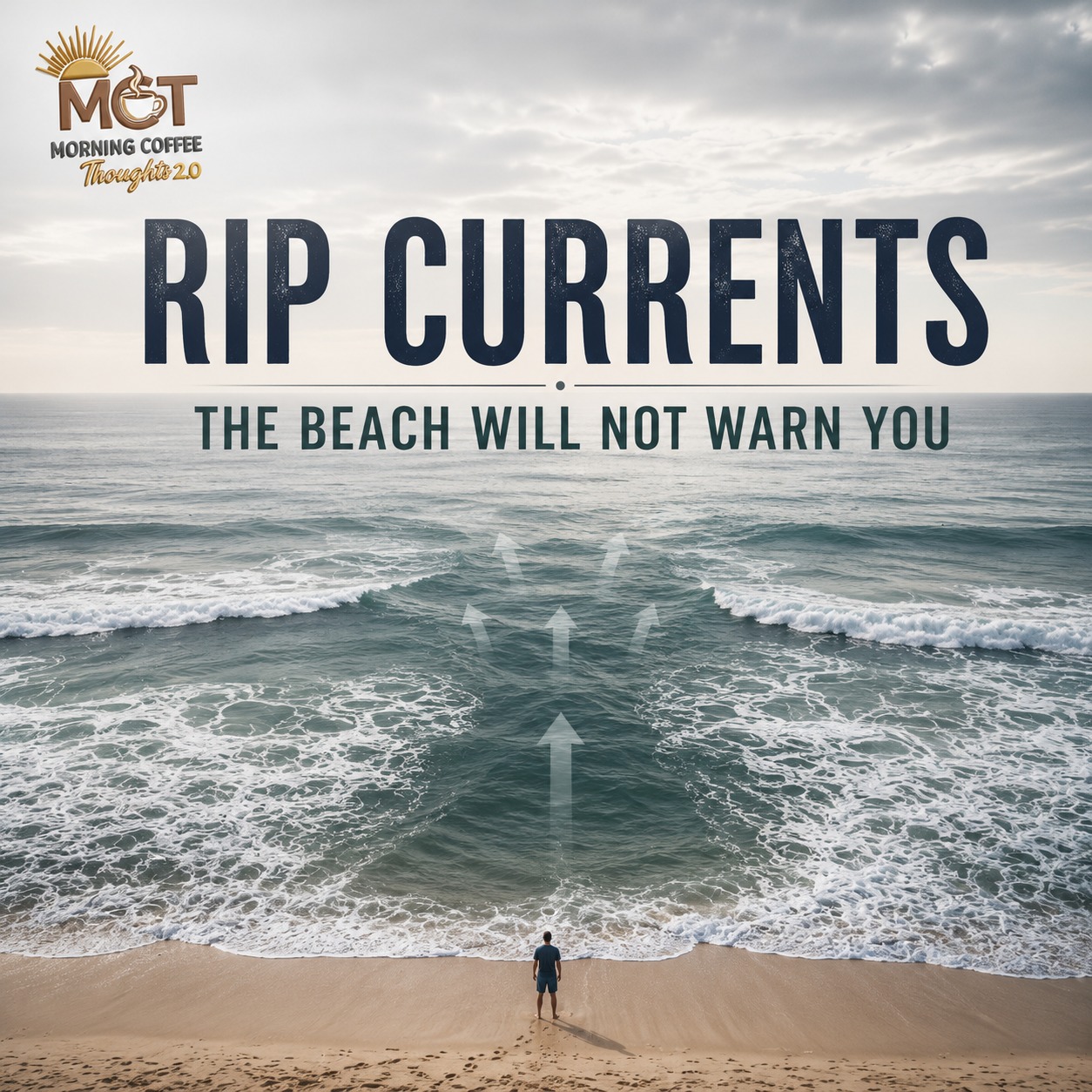
Two Ateneo Blue Eagles drowned off the coast of Baler, Aurora on June 8, 2026. They were basketball players, not competitive swimmers. The provincial police report said they were roughly 50 meters from shore, in open Pacific waters known for strong waves and rip current activity. Rescuers spent 30 to 40 minutes fighting the waves trying to reach them.
They were not reckless. They were just not prepared for what the ocean does silently, without announcement.
Most Filipinos are not beach people every weekend. We go to the beach during Holy Week, on summer getaways, during team-building trips. We do not grow up reading ocean flags or understanding what wave patterns mean. And that gap, between going to the beach and knowing how to survive it, is where people die.
Rip currents are responsible for 80 percent of beach rescues. In the United States alone, they kill roughly 100 people every year. In the Philippines, we do not even have complete national statistics on this yet. That silence should bother us.
WHAT A RIP CURRENT ACTUALLY IS
A rip current is a narrow, fast-moving channel of water that flows away from the shore, cutting through the breaking waves and heading out to sea. Think of it as a river inside the ocean. Waves push water toward the shore, that water has to go somewhere, and it funnels back out through the weakest gap it can find between sandbars, near piers, or beside rock formations.
The average rip current moves at 1 to 2 feet per second. Some can surge to 8 feet per second, faster than an Olympic swimmer at full sprint. Some rip currents are only 15 meters wide, while others stretch more than 50 yards across.
They do not pull you underwater. What they do is drag you away from shore, sometimes hundreds of meters out. The real danger is exhaustion, panic, and fighting a force you cannot outswim until you have no strength left in open water.
HOW TO SPOT ONE BEFORE YOU SWIM
The trick is to look before you go in. Spend a few minutes watching the water from a higher position, a dune, a parking lot, even the back of the beach. Elevation helps you see the pattern of the waves.
Here is what to look for.
A break in the wave pattern. Rip currents create a flat, almost calm-looking gap between areas where waves are actively breaking. The water looks still and inviting there, which becomes a trap, because many people walk straight into it thinking it is the safest spot.
Churning, choppy water. The surface inside a rip current often looks different from the water beside it. It can look bumpy, uneven, or mottled. The waves on both sides are breaking, but the zone of the current has a different texture.
Foam, seaweed, or debris moving away from shore. If you see floating material heading out to sea in a consistent line, a rip current is moving it. Watch it for a minute. If it keeps going outward without stopping, that is a signal.
Darker water between light patches. Rip currents often occupy deeper channels. Deeper water looks darker. The shorthand some instructors use is simple: white foam is where waves are breaking in shallower water, darker patches often mark deeper channels where currents can form.
Discolored, sandy water extending beyond the surf zone. A rip current carries sand with it. If you see a muddy-looking plume extending past the breaking waves, that is a sign of water being pulled offshore.
IF YOU ARE ALREADY IN ONE
First thing: do not fight it head-on. Swimming straight back to shore against a rip current is how people die. The current will outlast you. It does not get tired. You will.
Stay calm. The current will not pull you underwater. Hold on to that thought when panic starts to rise. You are being pulled out, not down.
Let it take you, then float if you are tired. There is updated guidance from experts now that moves away from the old rule of always swimming parallel. If you are not a strong swimmer, or if you are already exhausted, the better move is to let the current carry you past the breaking waves, then flip onto your back, legs up, the back of your head in the water, and use only gentle movements to stay afloat. Conserve energy and use that time to breathe.
If you still have strength, move parallel to the shore, or at an angle toward the breaking waves. Rip currents are narrow, so you do not need to swim far sideways to get out of one. Once you stop feeling the pull, angle back toward the beach, aiming for where you can see waves actively breaking because that usually means shallower water.
Wave your arm. Call out. Make yourself visible. A raised arm is a clear signal that says you need help.
BEFORE YOU GO TO THE BEACH
These are the steps that do not feel urgent until they are.
Check conditions before you arrive. Many weather services provide rip current forecasts. Waves of 2 to 3 feet or higher can produce strong rip currents even on a sunny day.
Ask the lifeguard when you arrive. Ask where the rip currents are. Ask them to point one out so you know what you are looking at. That short conversation can change how you read the water.
Swim near a lifeguard station whenever one exists. Lifeguards sit higher than everyone else for a reason. They can see the patterns in the surf. They often spot someone in trouble before that swimmer understands what is happening.
If there is no lifeguard present, avoid going deeper than waist height if you are not confident. Losing your footing in a rip current is when things escalate quickly.
IF YOU SEE SOMEONE ELSE CAUGHT
Do not go in after them without something that floats. Mahirap pakinggan, but the data is brutal here: many of the people who die in rip current incidents were trying to save someone else.
Take 10 seconds. Signal someone nearby. Look for a lifeguard down the beach. Call for help. Grab a boogie board, a cooler, any buoyant object, and see if you can throw it or reach with it. If you absolutely must enter the water, keep that flotation device between you and the person struggling.
Do not form a human chain. It looks like solidarity. People have drowned doing it.
Rip currents appear on clear days, at popular beaches, in water that looks welcoming. The Blue Eagles in Aurora were 300 meters from shore before anyone realized what was happening. Andrew Kim Remolino, a national swimmer and Asian Games medalist, said that even experienced open-water swimmers struggle when they cannot read the direction of the current.
Alam na natin ngayon. That knowledge is not everything, but it is more than we had yesterday.
When you bring your family to the beach next summer, will you spend five minutes watching the water before you go in?
SOURCES
- Cebu Daily News / Inquirer, https://cebudailynews.inquirer.net/736535/what-are-rip-currents-experts-explain-after-fatal-ateneo-drownings
- NOAA Ocean Today, https://oceantoday.noaa.gov/ripcurrentfeature/
- United States Lifesaving Association, https://www.usla.org/page/ripcurrents
- National Weather Service / NOAA, https://www.weather.gov/news/211309-7ripcurrent
- New York Times, https://www.nytimes.com/article/rip-current-survival-escape-tips.html
- Quincy Mutual Insurance, https://www.quincymutual.com/blog/how-to-identify-avoid-and-escape-a-rip-current/
- American Red Cross, https://www.redcross.org/content/dam/redcross/uncategorized/2/2313_rip_current_safety_final.pdf
- Science of the Surf, https://www.scienceofthesurf.com/rip-current-safety
- NOAA Ocean Today (Kids), https://oceantoday.noaa.gov/ripcurrentsafety/
- NOAA National Weather Service, https://www.weather.gov/media/owlie/rip_brochure_51419b.pdf
- UNSW Sydney Study on Rip Current Deaths, https://www.unsw.edu.au/newsroom/news/2025/04/rip-current-deaths-study
- YouTube / New Guidance on Rip Currents, https://www.youtube.com/watch?v=lofVgAzut6w
- Philippine Red Cross / WHO via Inquirer, https://newsinfo.inquirer.net/1754570/drowning-a-serious-public-health-issue-makes-holy-week-break-tragic-for-some
- NOAA Protect Yourself, https://oceantoday.noaa.gov/fullmoon-ripcurrent-protectyourself/welcome.html