
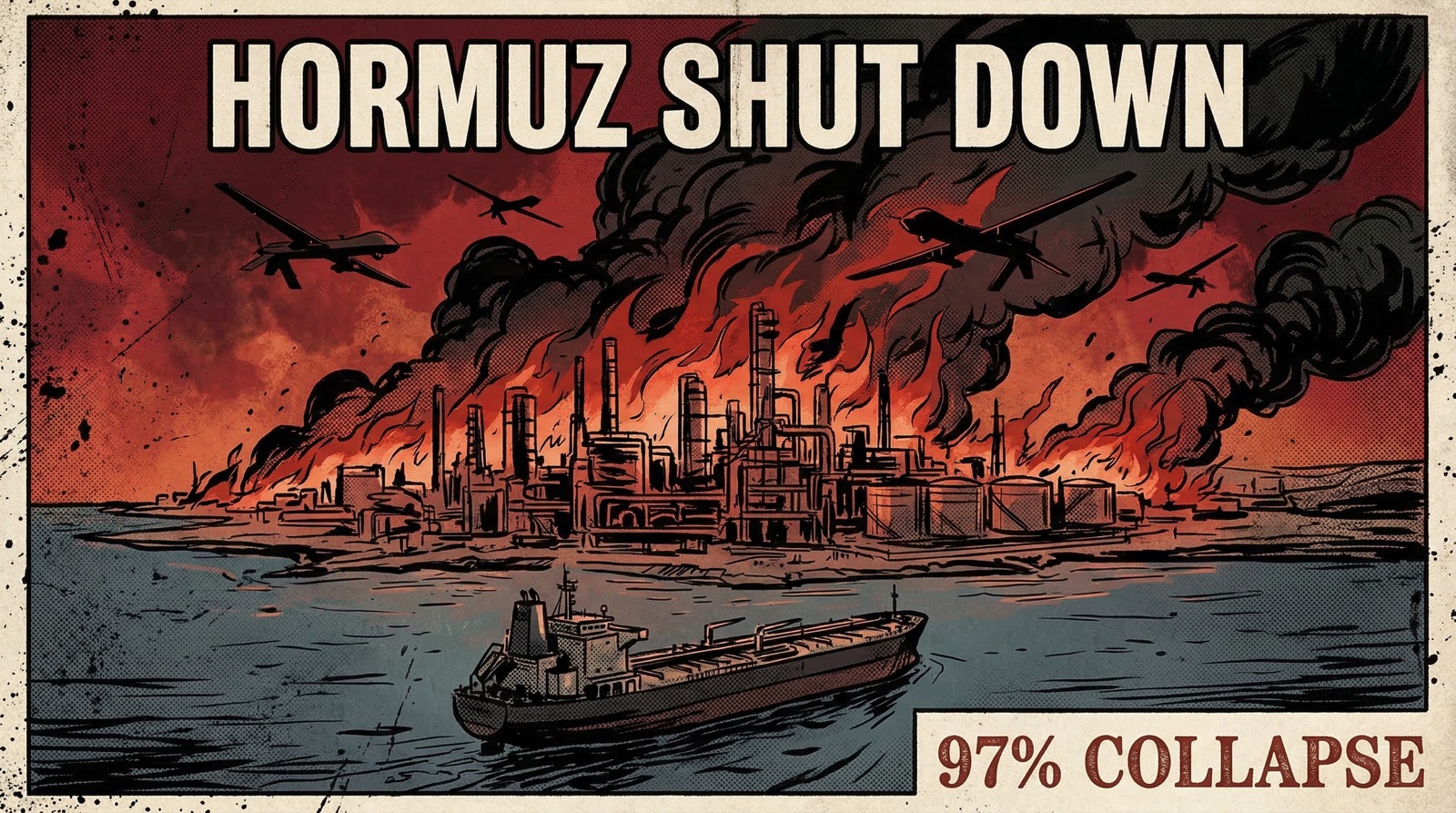
On Day 12 of the Iran war, Iranian drones breached Emirati air defenses and forced the shutdown of the Ruwais oil refinery in Abu Dhabi — one of the largest refining complexes on earth.
Abu Dhabi National Oil Company shut down the refinery's crude distillation unit, which processes 417,000 barrels per day, and initiated a plantwide safety shutdown, according to Reuters and industry monitor IIR Energy. The entire Ruwais facility has a refining capacity of up to 922,000 barrels per day.
The Abu Dhabi Media Office confirmed the strike: "The competent authorities in the Emirate of Abu Dhabi are dealing with a fire that broke out in one of the facilities within the Ruwais Industrial Complex, resulting from a drone attack, with no injuries recorded so far."
THE SCALE OF THE ATTACK
The UAE's Ministry of Defense said the country came under fire from nine ballistic missiles and 35 drones on Tuesday, according to the Washington Examiner.
Eight of the nine missiles were intercepted. One fell into the sea.
The drones were harder to stop. Nine breached Emirati defenses and reached their targets. Whether all nine struck the Ruwais complex or were distributed across multiple sites remains unclear.
Since the conflict began on February 28, the UAE has been one of the heaviest-targeted countries. The UAE Ministry of Defense reported a cumulative total of 262 ballistic missiles, eight cruise missiles, and 1,475 drones launched at the country. All cruise missiles were intercepted. Two ballistic missiles reached targets. Ninety drones breached air defenses.
HORMUZ TRAFFIC HAS EFFECTIVELY CEASED
The Strait of Hormuz — the narrow passage between Iran and Oman through which roughly 20 percent of the world's seaborne oil and liquefied natural gas flows daily — has been functionally closed.
Traffic through the strait dropped by 97 percent as of March 7 relative to the February average, according to United Nations data cited by Bloomberg and Reuters.
Maritime intelligence firm Windward recorded only two outbound vessel transits on March 8 — both Iranian-flagged — and zero inbound crossings. International commercial traffic has effectively withdrawn from the waterway.
The consequences downstream are already concrete. Iraqi oil production from southern fields reportedly fell 70 percent to approximately 1.3 million barrels per day, down from roughly 4.3 million barrels per day before the conflict, according to Windward's March 9 intelligence briefing. Iraqi exports dropped to around 800,000 barrels per day, with only two tankers loading and no new arrivals. Storage capacity reached maximum levels, forcing remaining production toward domestic refining.
OIL PRICES AND THE VOLATILITY
Crude oil spiked during the conflict. Brent crude reached as high as $119.50 per barrel before pulling back. A brief plunge to around $82 occurred after what appeared to be a mistakenly published and subsequently deleted US government social media post suggesting a naval escort for commercial shipping through Hormuz, according to earlier MCT reporting. Prices have since fluctuated, with the Ruwais strike expected to add upward pressure.
Iran's Foreign Minister stated that diplomatic talks are "no longer on the agenda," according to multiple wire reports.
WHAT THIS MEANS FOR THE PHILIPPINES
The Philippines imports virtually all of its crude oil and refined petroleum products. The effective closure of the Strait of Hormuz has already sent domestic fuel prices into their 11th consecutive week of increases.
Diesel price hikes of P17.50 to P24.25 per liter took effect on March 10, with Shell Pilipinas implementing the steepest single increase at P24.25 per liter, staggered over three days. Gasoline prices rose by P7 to P13 per liter.
President Ferdinand Marcos Jr. formally requested emergency powers from Congress on March 9 to reduce excise taxes on petroleum products — a move that had been under consideration for weeks but became a formal request as crude prices sustained levels above $80 per barrel.
Tens of thousands of Filipino overseas workers remain deployed across the Persian Gulf region. The Department of Migrant Workers designated the area as a "warlike operations" zone in early March, triggering enhanced protections and contingency planning for possible repatriation. Filipino seafarers on commercial vessels have increasingly refused Gulf deployments.
The Philippine peso had already touched a record low of P59.50 against the US dollar, and the Bangko Sentral ng Pilipinas had warned of a potential rate hike if oil-driven inflation continues.
SOURCES
- Reuters, https://www.reuters.com/world/middle-east/fire-hits-site-housing-abu-dhabi-national-oil-company-operations-after-drone-2026-03-10/
- Bloomberg, https://www.bloomberg.com/news/articles/2026-03-10/hormuz-disruptions-in-iran-war-will-hit-food-prices-not-just-oil-un
- Washington Examiner, https://www.washingtonexaminer.com/news/world/4486403/iranian-drones-hit-largest-oil-refinery-middle-east/
- Reuters, https://www.reuters.com/business/energy/what-are-challenges-securing-shipping-through-strait-hormuz-2026-03-10/
- Windward Maritime Intelligence, https://windward.ai/blog/march-9-maritime-intelligence-daily/
- Bloomberg, https://www.bloomberg.com/news/articles/2026-03-10/uae-says-drone-attack-causes-fire-in-zone-that-houses-refinery
- GMA News, https://www.gmanetwork.com/news/topstories/nation/979161/philippines-shifts-to-four-day-work-week-as-iran-war-pushes-oil-prices-up/story/