
Please note that I did not include everything that happened during the hearing. These are simply my notes on the major developments, exchanges, clashes, disruptions, and some of the more memorable moments from today’s proceedings.
• National Bureau of Investigation Director Melvin Matibag remained on the witness stand as the hearing focused largely on Article IV, involving Vice President Sara Duterte’s statements about having someone kill President Ferdinand Marcos Jr., First Lady Liza Araneta-Marcos, and former House Speaker Martin Romualdez if she herself were killed.
• The defense continued questioning Matibag’s interpretation of Duterte’s statements, particularly whether they amounted to a threat or, as the NBI argued, an active and continuing plan.
• Matibag maintained that Duterte’s remarks went beyond a threat because she had publicly said she contracted someone to kill the President and the others if she were killed.
• The defense also questioned how the NBI reached its conclusions and whether there was sufficient basis to classify the statements as a national-security concern.
• Matibag was pressed over the NBI’s use of the term “kinetic force.” He suggested that Duterte’s statements could help drive supporters into real-world action.
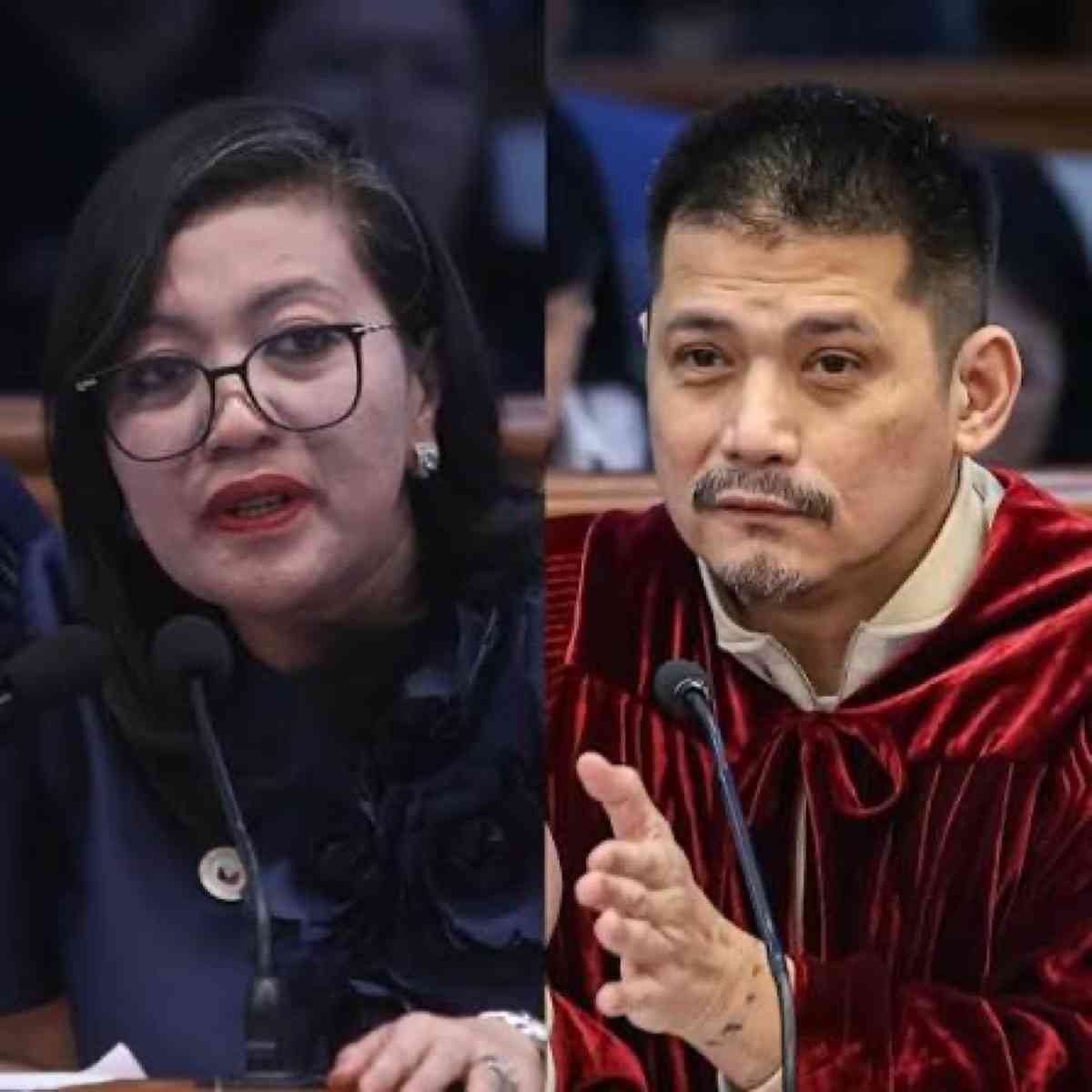
• Senator-judge Robin Padilla questioned the prosecution’s reliance on certain witnesses he said faced perjury-related allegations and suggested that the presentation was unfair.
• House lead prosecutor Gerville Luistro responded and defended the prosecution’s witnesses.
• At one point, Padilla complained about comments coming from the gallery while he was speaking, prompting a brief disturbance.
• Presiding Officer Francis Escudero intervened and reminded participants and the gallery to follow courtroom rules while directing the Sergeant-at-Arms to maintain order.
• Raffy Tulfo raised one of the sharper procedural complaints of the day when he questioned what he saw as uneven enforcement of the two-minute speaking limit for senator-judges.
• Tulfo complained that some senators appeared to be allowed to speak for five or ten minutes while others were being cut off after two.
• Escudero replied that there are no majority or minority blocs inside the impeachment court and directed the secretariat to enforce the time limits uniformly.
• The exchange showed visible tension among the senator-judges over how the proceedings were being managed.
• At one point, Senator Bong Go referenced the 2011 incident in which Sara Duterte, then Davao City mayor, punched a court sheriff.
• The old incident was inserted into the discussion on Duterte’s temperament and whether aggressive behavior or language necessarily proves an actual intention to carry out a threat.
• The sheriff-punching episode also became one of the stranger moments of the hearing, considering that the discussion had been centered on alleged assassination threats and national-security concerns.
• Matibag faced sustained questioning not only from the defense but also from senator-judges examining the NBI’s methodology and conclusions.
• Outside the witness examination, the controversy over subpoenas for financial records continued.
• Several senator-judges, including Alan Peter Cayetano, Pia Cayetano, Loren Legarda, Imee Marcos, and Camille Villar, have filed manifestations raising reservations or objections about the subpoenas for financial records.
• Those manifestations did not reverse the impeachment court’s earlier decision granting the subpoenas.
• The hearing also shifted at several points into procedural debates, manifestations, arguments over speaking time, and side exchanges involving the senator-judges.
• Some of the most memorable moments came from the senator-judges themselves rather than from the witness examination.
• Taken together, the hearing suggested that the impeachment court itself is increasingly becoming part of the story. Some senator-judges are openly challenging witnesses, questioning the prosecution, disputing procedure, and competing for control of the floor.
Image borrowed from The Manila Bulletin